
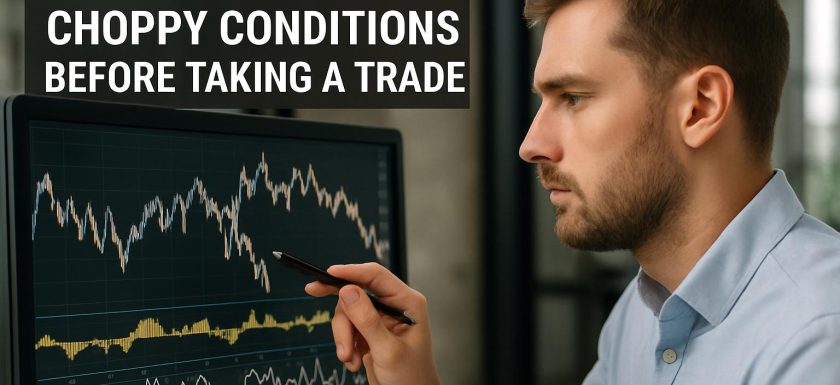
Understanding Choppy Market Conditions
In the world of trading, one often encounters various market conditions that can influence decision-making processes. Among these is the phenomenon known as a choppy market, which is characterized by indecisive price movements, lacking a clear upward or downward trend. Such conditions present unique challenges and can be particularly frustrating for traders, especially those who rely on clear directional movement to capitalize on price fluctuations. Recognizing choppy market conditions before committing to a trade becomes crucial to managing risks and avoiding potential losses.
Key Indicators of Choppy Conditions
Identifying choppy market conditions demands a keen observation of several key indicators. These markers serve as essential tools for traders to discern the subtle signs of potential choppiness.
Price Action
One of the foremost indicators of a choppy market is the behavior of price action. Choppy conditions become apparent when prices fluctuate within a narrow range. This absence of clear directional cues, such as higher highs accompanied by higher lows or lower highs paired with lower lows, signals a lack of market direction. Traders observing price action on charts can identify these lateral or sideways movements, which are symptomatic of an indecisive market.
Volatility Levels
Volatility often plays a significant role in identifying choppy markets. A common characteristic of such markets is low volatility. Examining tools such as the Average True Range (ATR) or other volatility indicators allows traders to assess market stability. Typically, when ATR values drop to lower levels, this reduction signifies diminished volatility and, consequently, suggests potential market choppiness.
Technical Indicators
Utilizing technical indicators can provide further insight into the market’s behavior, confirming the presence of choppy conditions. The Moving Average Convergence Divergence (MACD) indicator, for example, when showing tight or minimal fluctuations around the zero line, may be indicative of an indecisive market. Similarly, Bollinger Bands offer additional perspectives; if the bands appear narrow, this condition typically points toward low volatility and possible choppiness.
Volume Analysis
Volume analysis serves as another critical component in diagnosing choppy markets. Observing lower trading volumes can often correlate with choppy market behavior. When volume indicators reflect decreasing trading activity, it suggests that the market may be lacking the momentum necessary to break out of its existing range. As a result, traders may find opportunities for significant gains to be more limited under these circumstances.
Strategies to Handle Choppy Markets
Once traders successfully identify choppy conditions, it becomes imperative to consider strategies tailored to managing the accompanying risks.
Avoid Over-Trading
A crucial strategy for navigating choppy markets involves refraining from over-trading. During these conditions, traders may be tempted to increase trade frequency in an attempt to capture even minor price movements. However, this approach can lead to substantial losses when market conditions lack a clear directional trend.
Use Wider Stops
To counteract the risk of being stopped out prematurely during choppy periods, traders might consider using wider stop-loss orders. While this tactic can offer more flexibility under uncertain conditions, it is essential to employ it judiciously, ensuring that it does not violate overall risk management principles and safeguards are in place.
Switch to Non-Directional Strategies
In the face of choppy markets, employing non-directional trading strategies becomes more advantageous. Methods such as options trading, particularly focusing on strategies like calendar spreads and iron condors, can yield consistent profits if the underlying asset remains within a specified range. This way, traders can benefit from market stability without relying on directional movements.
Focus on Risk Management
At the core of any trading endeavor lies the importance of sound risk management. This concept assumes particular importance during periods of market choppiness, where uncertainty prevails. Maintaining a strict risk-reward ratio and actively protecting capital by limiting exposure are essential practices for traders to adhere to, regardless of market conditions.
Additional Resources for Traders
For those seeking to expand their knowledge of identifying and trading in choppy markets, additional resources are available to provide in-depth guidance. These resources can supplement one’s understanding and better prepare traders to navigate diverse market scenarios effectively. To explore further, consider consulting dedicated guides or materials that delve deeper into the intricacies of choppy market trading.
In the realm of trading, understanding when not to trade proves to be just as vital as knowing the ideal entry points for market engagement. By honing their ability to identify choppy conditions accurately, traders can minimize risk and consciously avoid getting entangled in unfavorable trading situations. Embracing such discernment enhances traders’ overall effectiveness, ensuring more strategic and prudent approaches to the ever-changing dynamics of financial markets.
This article was last updated on: June 5, 2026